

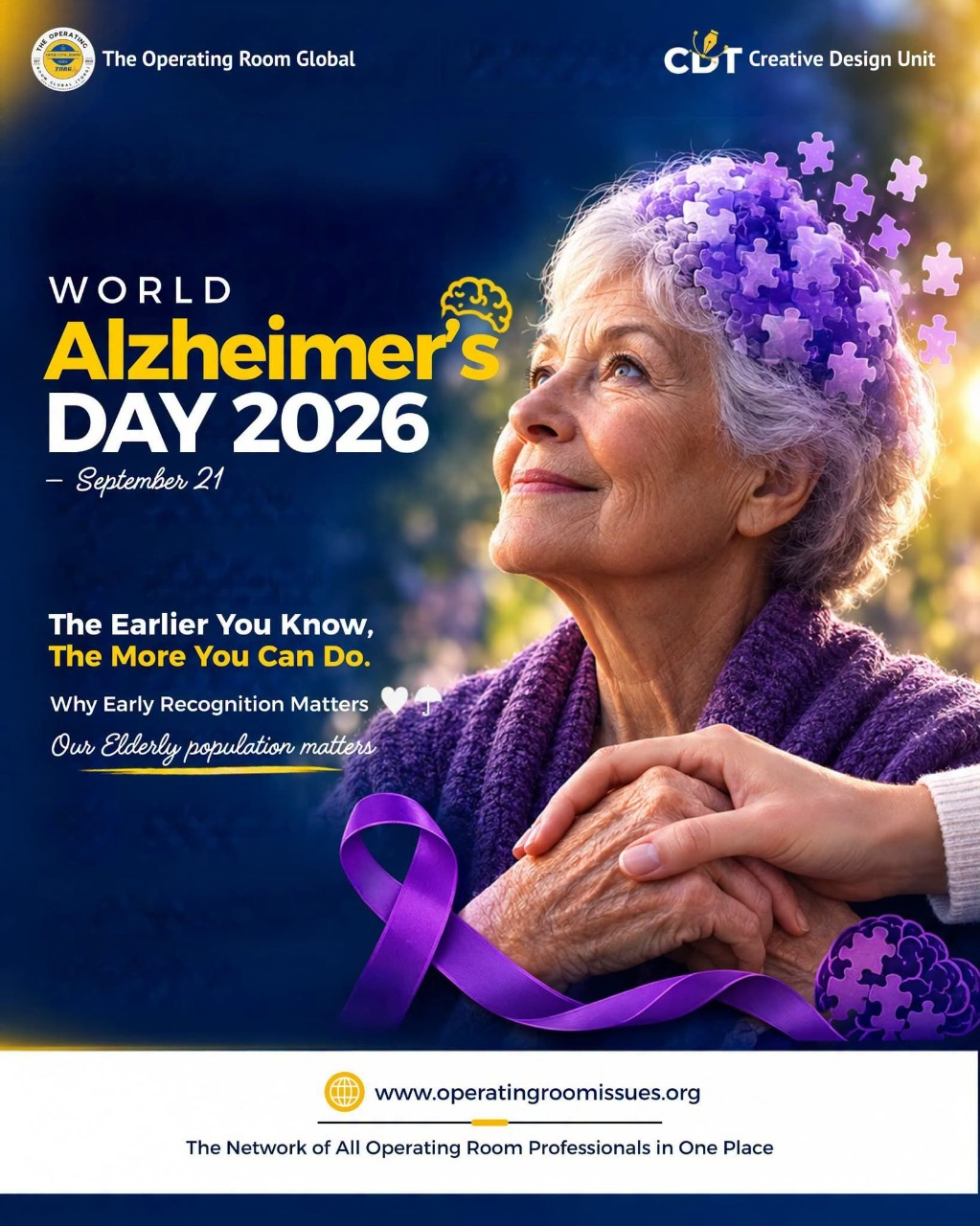
𝐖𝐎𝐑𝐋𝐃 𝐀𝐋𝐙𝐇𝐄𝐈𝐌𝐄𝐑’𝐒 𝐃𝐀𝐘 𝟐𝟎𝟐𝟔
𝐓𝐡𝐞 𝐄𝐚𝐫𝐥𝐢𝐞𝐫 𝐘𝐨𝐮 𝐊𝐧𝐨𝐰, 𝐓𝐡𝐞 𝐌𝐨𝐫𝐞 𝐘𝐨𝐮 𝐂𝐚𝐧 𝐃𝐨: 𝐖𝐡𝐲 𝐄𝐚𝐫𝐥𝐲 𝐑𝐞𝐜𝐨𝐠𝐧𝐢𝐭𝐢𝐨𝐧 𝐌𝐚𝐭𝐭𝐞𝐫𝐬
Although World Alzheimer’s Day was observed yesterday, awareness should not end with the date.
Alzheimer’s disease is a progressive brain disorder that affects memory, thinking, behaviour, and the ability to carry out everyday activities. It is the most common cause of dementia and can lead to progressive cognitive and functional decline, affecting not only those living with the disease but also their families and caregivers.
In the United States, an estimated 7.4 million people aged 65 and older are living with Alzheimer’s dementia in 2026. About 1 in 9 people aged 65 and older (11%) has Alzheimer’s dementia. Without medical breakthroughs to prevent or cure the disease, this number could rise to a projected 13.8 million by 2060. Alzheimer’s disease was also officially listed as the fifth-leading cause of death among Americans aged 65 and older in 2024.
Globally, dementia affected an estimated 57 million people in 2021, with more than 60% living in low- and middle-income countries. Each year, there are nearly 10 million new cases of dementia. Yet, there remains a significant gap in awareness, diagnosis, care and reliable data, particularly in settings where access to appropriate assessment and healthcare services may be limited.
While there is currently no cure for Alzheimer’s disease, early recognition and appropriate assessment can help individuals and families access available treatment, plan care, manage symptoms, and receive the support they need. Some newer treatments may slow cognitive and functional decline in carefully selected people with early Alzheimer’s disease, alongside other approaches focused on maintaining quality of life and supporting caregivers.
Alzheimer’s disease is indeed a neurological and public health burden, especially among older adults. Therefore, TORG calls for:
☑️ Greater efforts to improve the collection and reporting of reliable data on dementia and Alzheimer’s disease.
☑️ More awareness campaigns aimed at educating individuals, families and communities about dementia, risk factors and warning signs.
☑️ Timely medical assessment for people experiencing concerning changes in memory, thinking or daily functioning.
☑️ Improved access to appropriate treatment and supportive care for people living with Alzheimer’s disease.
☑️ Greater support for caregivers and families, who play a major role in caring for people living with dementia.
𝑂𝑢𝑟 𝐸𝑙𝑑𝑒𝑟𝑙𝑦 𝑝𝑜𝑝𝑢𝑙𝑎𝑡𝑖𝑜𝑛 𝑚𝑎𝑡𝑡𝑒𝑟𝑠
𝑇𝑂𝑅𝐺 𝐶𝑒𝑙𝑒𝑏𝑟𝑎𝑡𝑒𝑠 𝑊𝑜𝑟𝑙𝑑 𝐴𝑙𝑧ℎ𝑒𝑖𝑚𝑒𝑟’𝑠 𝐷𝑎𝑦
𝐉𝐨𝐢𝐧 𝐎𝐮𝐫 𝐆𝐥𝐨𝐛𝐚𝐥 𝐂𝐨𝐦𝐦𝐮𝐧𝐢𝐭𝐲!
The Operating Room Global (TORG)
𝑇ℎ𝑒 𝐿𝑎𝑟𝑔𝑒𝑠𝑡 𝑁𝑒𝑡𝑤𝑜𝑟𝑘 𝑜𝑓 𝑎𝑙𝑙 𝑂𝑝𝑒𝑟𝑎𝑡𝑖𝑛𝑔 𝑅𝑜𝑜𝑚 𝑃𝑟𝑜𝑓𝑒𝑠𝑠𝑖𝑜𝑛𝑎𝑙𝑠 𝑖𝑛 𝑂𝑛𝑒 𝑃𝑙𝑎𝑐𝑒!
Learn More:
https://linktr.ee/operatingroomissues
#TORG #theoperatingroomglobal #operatingroomissues #worldalzheimer’sday2026 #alzheimer’sdisease #elderslivesmatter