

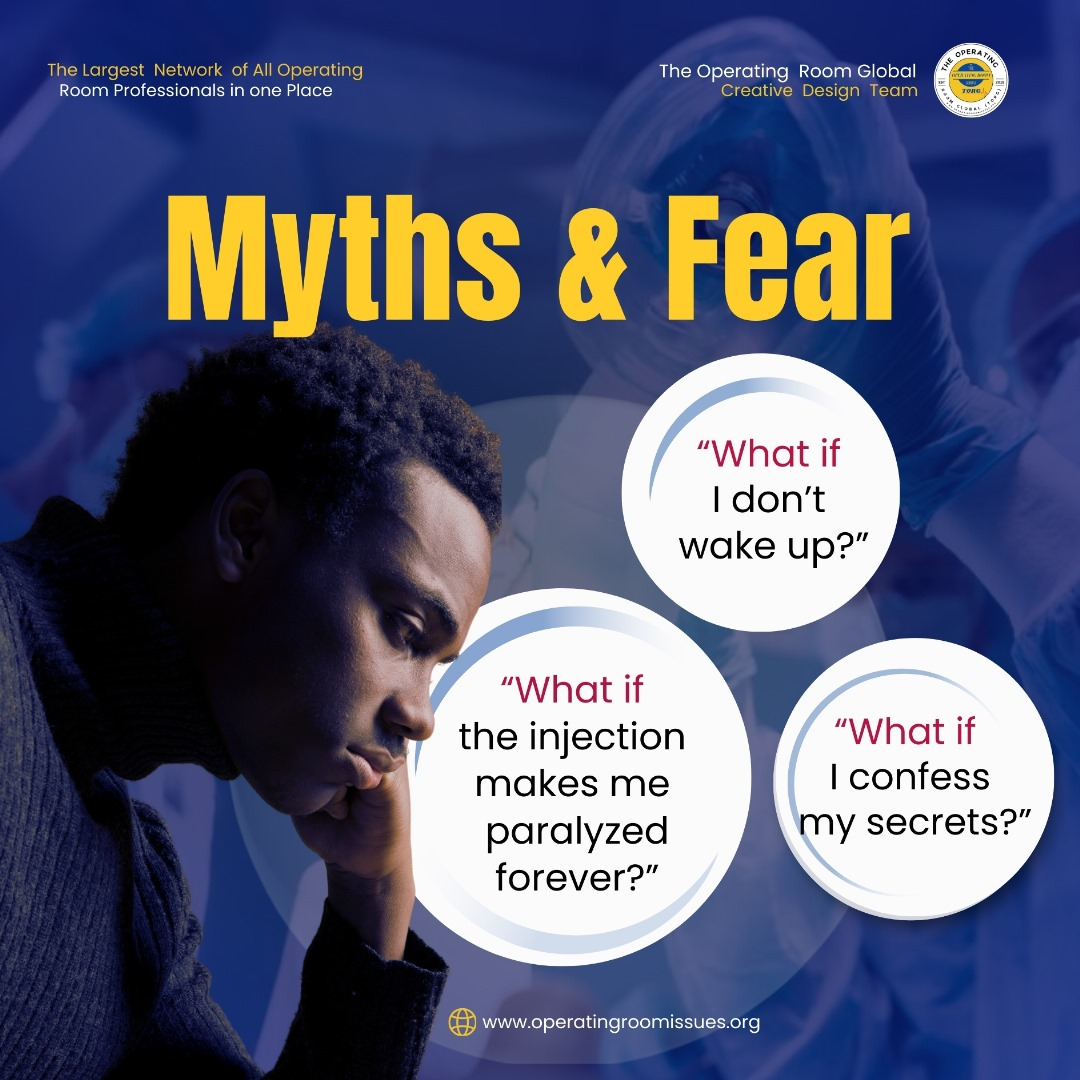
𝗕𝗲𝘆𝗼𝗻𝗱 𝘁𝗵𝗲 𝗠𝗮𝘀𝗸 — 𝗕𝗿𝗲𝗮𝗸𝗶𝗻𝗴 𝗠𝘆𝘁𝗵𝘀 𝗔𝗿𝗼𝘂𝗻𝗱 𝗔𝗻𝗲𝘀𝘁𝗵𝗲𝘀𝗶𝗮
When most people hear the word anesthesia, their first thoughts are often fear-filled:
 “What if I don’t wake up?”
“What if I confess my secrets?”
“What if the injection makes me paralyzed forever?”
These myths have been whispered from generation to generation, painting anesthesia as something to dread rather than a lifesaving tool. But the truth is far from the fear.
⸻
𝗔 𝗕𝗿𝗶𝗲𝗳 𝗟𝗼𝗼𝗸 𝗕𝗮𝗰𝗸 — Care Before Anesthesia
Imagine a world where you have to be hit on the head just so you can pass out before surgeries were done,  now imagine a world where surgeries were done while patients were fully awake and you don’t have to in-cure a injury to fix another.
𝙅𝙪𝙨𝙩 𝙖 𝙛𝙚𝙬 𝙘𝙚𝙣𝙩𝙪𝙧𝙞𝙚𝙨 𝙖𝙜𝙤, 𝙤𝙥𝙚𝙧𝙖𝙩𝙞𝙤𝙣𝙨 𝙬𝙚𝙧𝙚 𝙥𝙚𝙧𝙛𝙤𝙧𝙢𝙚𝙙 𝙬𝙞𝙩𝙝 𝙥𝙖𝙩𝙞𝙚𝙣𝙩𝙨 𝙨𝙘𝙧𝙚𝙖𝙢𝙞𝙣𝙜 𝙞𝙣 𝙖𝙜𝙤𝙣𝙮. 𝙏𝙝𝙚 𝙤𝙣𝙡𝙮 “𝙧𝙚𝙡𝙞𝙚𝙛” 𝙬𝙖𝙨 𝙖𝙡𝙘𝙤𝙝𝙤𝙡, 𝙤𝙥𝙞𝙪𝙢, 𝙤𝙧 𝙗𝙚𝙞𝙣𝙜 𝙝𝙚𝙡𝙙 𝙙𝙤𝙬𝙣 𝙗𝙮 𝙨𝙚𝙫𝙚𝙧𝙖𝙡 𝙥𝙚𝙤𝙥𝙡𝙚.
The discovery of anesthesia in the 19th century changed medicine forever. 
 It allowed patients to undergo surgery without pain and gave surgeons the freedom to operate with precision and care. Truly, it was one of medicine’s greatest revolutions.

Before the discovery of anesthesia, surgery was a nightmare. Patients were strapped to tables, held down by strong men, and forced to endure every cut and stitch while wide awake. Amputations, tumor removals, and even childbirth were performed in unimaginable pain. 𝙎𝙪𝙧𝙜𝙚𝙤𝙣𝙨 𝙝𝙖𝙙 𝙩𝙤 𝙗𝙚 𝙛𝙖𝙨𝙩 𝙧𝙖𝙩𝙝𝙚𝙧 𝙩𝙝𝙖𝙣 𝙥𝙧𝙚𝙘𝙞𝙨𝙚, 𝙧𝙖𝙘𝙞𝙣𝙜 𝙖𝙜𝙖𝙞𝙣𝙨𝙩 𝙨𝙘𝙧𝙚𝙖𝙢𝙨 𝙖𝙣𝙙 𝙗𝙡𝙤𝙤𝙙 𝙡𝙤𝙨𝙨.
The arrival of anesthesia in the mid-19th century – first with ether and chloroform, changed everything. 𝑭𝒐𝒓 𝒕𝒉𝒆 𝒇𝒊𝒓𝒔𝒕 𝒕𝒊𝒎𝒆 𝒊𝒏 𝒉𝒊𝒔𝒕𝒐𝒓𝒚, 𝒑𝒂𝒕𝒊𝒆𝒏𝒕𝒔 𝒄𝒐𝒖𝒍𝒅 𝒖𝒏𝒅𝒆𝒓𝒈𝒐 𝒔𝒖𝒓𝒈𝒆𝒓𝒚 𝒘𝒊𝒕𝒉𝒐𝒖𝒕 𝒑𝒂𝒊𝒏, 𝒂𝒏𝒅 𝒔𝒖𝒓𝒈𝒆𝒐𝒏𝒔 𝒄𝒐𝒖𝒍𝒅 𝒐𝒑𝒆𝒓𝒂𝒕𝒆 𝒄𝒂𝒓𝒆𝒇𝒖𝒍𝒍𝒚, 𝒘𝒊𝒕𝒉 𝒂𝒄𝒄𝒖𝒓𝒂𝒄𝒚 𝒂𝒏𝒅 𝒄𝒂𝒍𝒎𝒏𝒆𝒔𝒔. 𝑻𝒉𝒊𝒔 𝒔𝒊𝒏𝒈𝒍𝒆 𝒎𝒆𝒅𝒊𝒄𝒂𝒍 𝒅𝒊𝒔𝒄𝒐𝒗𝒆𝒓𝒚 𝒕𝒓𝒂𝒏𝒔𝒇𝒐𝒓𝒎𝒆𝒅 𝒔𝒖𝒓𝒈𝒆𝒓𝒚 𝒇𝒓𝒐𝒎 𝒂 𝒃𝒓𝒖𝒕𝒂𝒍 𝒐𝒓𝒅𝒆𝒂𝒍 𝒊𝒏𝒕𝒐 𝒂 𝒑𝒂𝒕𝒉𝒘𝒂𝒚 𝒐𝒇 𝒉𝒆𝒂𝒍𝒊𝒏𝒈 𝒂𝒏𝒅 𝒉𝒐𝒑𝒆. 𝑻𝒐𝒅𝒂𝒚, 𝒂𝒏𝒆𝒔𝒕𝒉𝒆𝒔𝒊𝒂 𝒄𝒐𝒏𝒕𝒊𝒏𝒖𝒆𝒔 𝒕𝒐 𝒃𝒆 𝒐𝒏𝒆 𝒐𝒇 𝒕𝒉𝒆 𝒈𝒓𝒆𝒂𝒕𝒆𝒔𝒕 𝒓𝒆𝒗𝒐𝒍𝒖𝒕𝒊𝒐𝒏𝒔 𝒊𝒏 𝒎𝒆𝒅𝒊𝒄𝒊𝒏𝒆.
⸻
𝗧𝗵𝗲 𝗘𝘃𝗼𝗹𝘂𝘁𝗶𝗼𝗻 𝗼𝗳 𝗔𝗻𝗲𝘀𝘁𝗵𝗲𝘀𝗶𝗮 — From Ether to Modern Safety
The 19th century marked a turning point in medicine.  Scientific discoveries in pharmacology and physiology opened doors that changed surgery forever. In the 1840s, doctors introduced the first general anesthetics:
• 𝑫𝒊𝒆𝒕𝒉𝒚𝒍 𝒆𝒕𝒉𝒆𝒓 (1842)
• 𝑵𝒊𝒕𝒓𝒐𝒖𝒔 𝒐𝒙𝒊𝒅𝒆 (1844)
• 𝑪𝒉𝒍𝒐𝒓𝒐𝒇𝒐𝒓𝒎 (1847)
Patients no longer had to endure surgery awake and in agony. These discoveries gave birth to modern surgery. Around the same time, antiseptic techniques — inspired by the germ theory of disease — greatly reduced infections, making operations far safer.
The 20th century brought even greater progress. The routine use of tracheal intubation and advanced airway management meant that anesthetists could protect breathing throughout surgery. Continuous monitoring (heart rate, blood pressure, oxygen levels, and brain activity) became the standard of care, allowing doctors to act immediately if anything changed.

By the late 20th and early 21st centuries, structured training for anesthesiologists and nurse anesthetists, alongside new anesthetic drugs with improved safety, transformed anesthesia into one of the most reliable fields in modern medicine. 𝙏𝙤𝙙𝙖𝙮, 𝙢𝙞𝙡𝙡𝙞𝙤𝙣𝙨 𝙤𝙛 𝙥𝙧𝙤𝙘𝙚𝙙𝙪𝙧𝙚𝙨 𝙖𝙧𝙚 𝙘𝙖𝙧𝙧𝙞𝙚𝙙 𝙤𝙪𝙩 𝙨𝙖𝙛𝙚𝙡𝙮 𝙚𝙖𝙘𝙝 𝙮𝙚𝙖𝙧 𝙩𝙝𝙖𝙣𝙠𝙨 𝙩𝙤 𝙩𝙝𝙚𝙨𝙚 𝙖𝙙𝙫𝙖𝙣𝙘𝙚𝙢𝙚𝙣𝙩𝙨.
⸻
𝗧𝗵𝗲 𝗠𝘆𝘁𝗵𝘀 𝗮𝗻𝗱 𝗧𝗵𝗲 𝗙𝗮𝗰𝘁𝘀
 Myth 1: “I won’t wake up if I’m put to sleep.”
 Fact: Modern anesthesia is very safe. Anesthetists continuously monitor heart, breathing, and brain function throughout surgery. Doses are carefully calculated, and reversal drugs are available when needed. The risk of not waking up is extremely rare compared to the risk of refusing surgery.
Myth 2: “I will confess secrets under anesthesia.”
Fact: Under anesthesia, patients may mumble random, incoherent words — but it is not a “truth serum.” What is said is medically meaningless and quickly forgotten.
Myth 3: “Anesthesia is just sleep.”
Fact: Anesthesia is not natural sleep — it is a medically controlled state where the brain is prevented from feeling pain, and the body is kept stable. It is carefully tailored to each patient’s needs.
Myth 4: “Spinal anesthesia causes permanent paralysis.”
Fact: Spinal anesthesia is widely used for cesarean sections and lower-body surgeries. The chance of permanent damage is extremely rare when done by trained professionals. For millions every year, it is safe and effective.
Myth 5: “Only weak people need anesthesia.”
Fact: Anesthesia is not about weakness; it is about safety. Even the strongest warrior cannot fight surgical pain. Anesthesia ensures that surgery is humane, precise, and survivable.
Myth 6: “Anesthesia is dangerous and can be lethal.”
Fact: Anesthesia is generally safe when administered by trained professionals. The risks are minimal, and advancements in monitoring and drug administration have significantly improved safety. Serious complications are rare and often related to pre-existing medical conditions.
Myth 7: “Once you’re under anesthesia, the anesthesiologist’s job is done.”
Fact: This is a common misunderstanding. Anesthesiologists are constantly monitoring you throughout the entire procedure to ensure your safety and comfort. They don’t just administer the anesthesia and leave. In fact, they continuously assess your vital signs (heart rate, blood pressure, oxygen levels) and make adjustments to keep you stable and unconscious (if under general anesthesia). The anesthesiologist is an essential part of your surgical team from start to finish.
⸻
𝗧𝗵𝗲 𝗦𝗶𝗹𝗲𝗻𝘁 𝗛𝗲𝗿𝗼𝗲𝘀 𝗼𝗳 𝗦𝘂𝗿𝗴𝗲𝗿𝘆
Behind every successful operation is an anesthetist, a guardian who ensures the patient breathes, the heart beats steadily, and pain stays away. 
 They are the unseen heroes of the operating room, yet their role is often misunderstood or ignored.
⸻
𝗔 𝗠𝗲𝘀𝘀𝗮𝗴𝗲 𝗳𝗼𝗿 𝗣𝗮𝘁𝗶𝗲𝗻𝘁𝘀 𝗮𝗻𝗱 𝗖𝗼𝗺𝗺𝘂𝗻𝗶𝘁𝗶𝗲𝘀
Anesthesia is not a gamble with life. It is not witchcraft, not a curse, and not something to fear. It is a powerful medical tool that makes surgery possible, safe, and often lifesaving.
Modern anesthesia is built on precision, science, and safety. Every patient is carefully assessed before surgery. Doctors check the heart, lungs, and overall health to choose the safest plan. During surgery, advanced monitors track vital signs in real-time:
 heart rate
 breathing
 level of consciousness
blood pressure
At every second, an anesthetist is right there, adjusting medications, supporting breathing, and ensuring the body remains stable.
Today, anesthesia has one of the best safety records in medicine. The risk of major complications is extremely rare, far lower than the risk of refusing a needed surgery. A lot of persons undergo anesthesia every year and wake up safely, pain-free, and on the road to recovery.
𝑬𝒗𝒆𝒓𝒚 𝒚𝒆𝒂𝒓, 𝒎𝒊𝒍𝒍𝒊𝒐𝒏𝒔 𝒐𝒇 𝒑𝒂𝒕𝒊𝒆𝒏𝒕𝒔 𝒂𝒓𝒐𝒖𝒏𝒅 𝒕𝒉𝒆 𝒘𝒐𝒓𝒍𝒅, 𝒇𝒓𝒐𝒎 𝒏𝒆𝒘𝒃𝒐𝒓𝒏𝒔 𝒕𝒐 𝒕𝒉𝒆 𝒆𝒍𝒅𝒆𝒓𝒍𝒚, 𝒖𝒏𝒅𝒆𝒓𝒈𝒐 𝒔𝒖𝒓𝒈𝒆𝒓𝒚 𝒔𝒂𝒇𝒆𝒍𝒚 𝒃𝒆𝒄𝒂𝒖𝒔𝒆 𝒂𝒏𝒆𝒔𝒕𝒉𝒆𝒔𝒊𝒂 𝒑𝒓𝒐𝒕𝒆𝒄𝒕𝒔 𝒕𝒉𝒆𝒎. Every smooth operation is proof that science and care are stronger than myths.  Anesthesia has made surgery a great experience for both the patient and the doctor.
⸻
𝗢𝘂𝗿 𝗖𝗮𝗹𝗹
At The Operating Room Global (TORG), we say this loudly:
𝑨𝒏𝒆𝒔𝒕𝒉𝒆𝒔𝒊𝒂 𝒊𝒔 𝑺𝑨𝑭𝑬.
𝑨𝒏𝒆𝒔𝒕𝒉𝒆𝒔𝒊𝒂 𝒊𝒔 𝑳𝑰𝑭𝑬-𝑺𝑨𝑽𝑰𝑵𝑮.
𝑨𝒏𝒆𝒔𝒕𝒉𝒆𝒔𝒊𝒂 𝒊𝒔 𝑨 𝑮𝑨𝑻𝑬𝑾𝑨𝒀 𝑻𝑶 𝑯𝑬𝑨𝑳𝑰𝑵𝑮.
It’s time to replace fear with facts, and myths with truth.  Together, let us honor the science, the professionals, and the countless lives saved every day through the gift of anesthesia.
⸻
𝐉𝐨𝐢𝐧 𝐎𝐮𝐫 𝐆𝐥𝐨𝐛𝐚𝐥 𝐂𝐨𝐦𝐦𝐮𝐧𝐢𝐭𝐲!
The Operating Room Global (TORG)
𝑇ℎ𝑒 𝐿𝑎𝑟𝑔𝑒𝑠𝑡 𝑁𝑒𝑡𝑤𝑜𝑟𝑘 𝑜𝑓 𝑎𝑙𝑙 𝑂𝑝𝑒𝑟𝑎𝑡𝑖𝑛𝑔 𝑅𝑜𝑜𝑚 𝑃𝑟𝑜𝑓𝑒𝑠𝑠𝑖𝑜𝑛𝑎𝑙𝑠 𝑖𝑛 𝑂𝑛𝑒 𝑃𝑙𝑎𝑐𝑒!
Learn More:
https://linktr.ee/operatingroomissues
#TORG #TheOperatingRoomGlobal #OperatingRoomIssues #SafeAnesthesia #SurgerySavesLives #EndSurgicalFear #GlobalSurgery #MedicalAdvocacy #AnesthesiaAwareness