

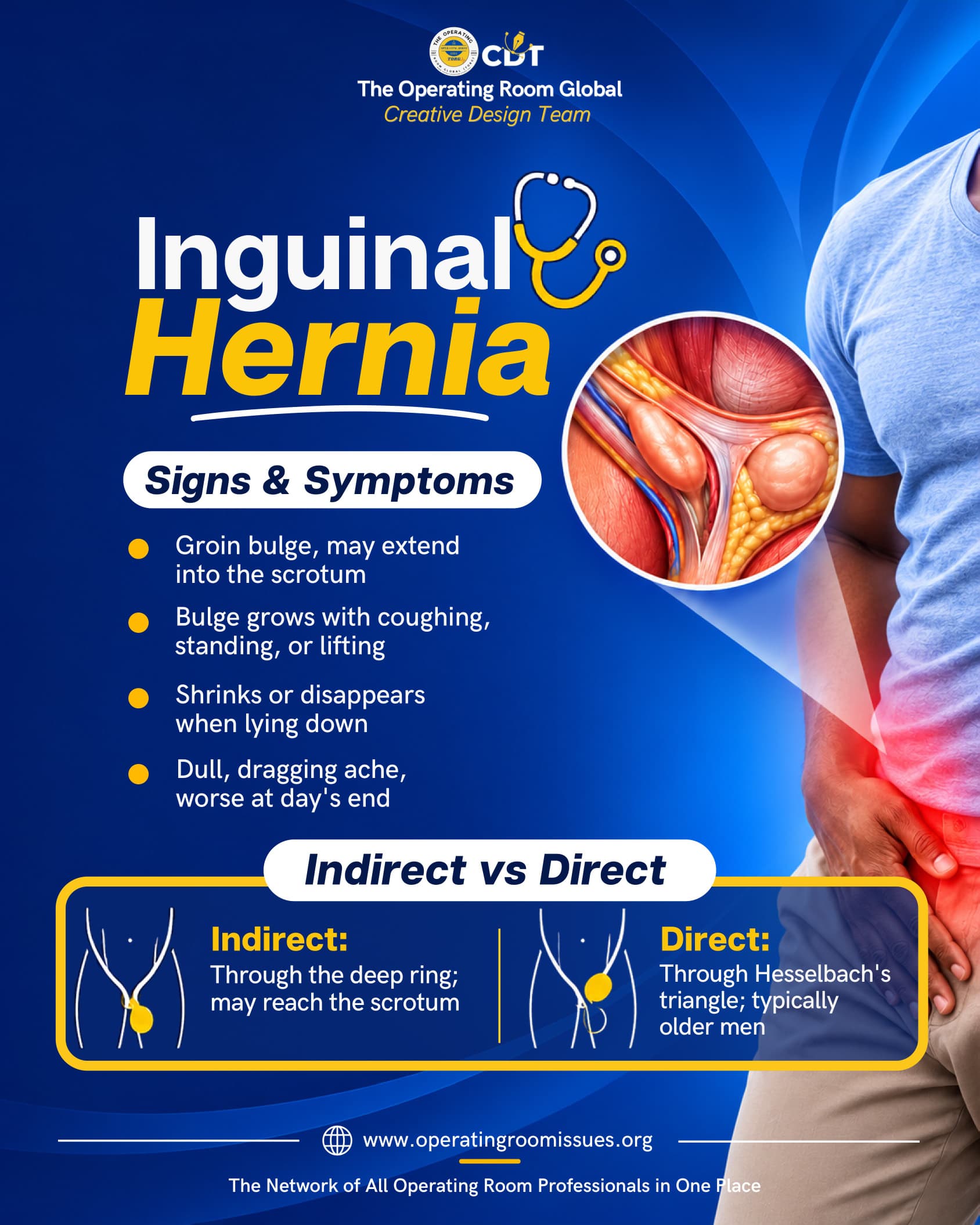
𝐒𝐔𝐑𝐆𝐈𝐂𝐀𝐋 𝐃𝐈𝐒𝐄𝐀𝐒𝐄 𝐒𝐈𝐆𝐍𝐒 & 𝐒𝐘𝐌𝐏𝐓𝐎𝐌𝐒 – 𝐈𝐍𝐆𝐔𝐈𝐍𝐀𝐋 𝐇𝐄𝐑𝐍𝐈𝐀 🩺
An inguinal hernia occurs when part of the intestine or fatty tissue pushes through a weak spot in the lower abdominal wall, causing a swelling in the groin. It is the most common abdominal wall hernia, predominantly affecting men, and may be painless at first but can lead to serious complications.
🔹 Classical Presentation
• Groin Bulge: A reducible swelling above the inguinal ligament, which may extend into the scrotum in men
• Cough Impulse: The bulge becomes more prominent on coughing, standing, straining, or lifting, and recedes on lying down
• Pain or Discomfort: A dull, dragging ache around the swelling, often worse at the end of the day
• On Examination: Bowel sounds may be heard over the swelling, and it does not transilluminate
🔹 Indirect vs Direct
• Indirect: Passes through the deep ring; may descend into the scrotum
• Direct: Bulges through Hesselbach’s triangle; typically older men, rarely scrotal.

🔹 When Should You Worry? 🚨
Watch out for signs of incarceration or strangulation:
• Sudden or severe pain
• A hard, tender swelling that cannot be pushed back
• Redness or darkening of the skin
• Vomiting or abdominal swelling
• Inability to pass stool or gas
• Fever and a fast heart rate
This is a surgical emergency requiring urgent intervention.
🔹 What Should You Do?
If you notice a groin swelling, seek medical assessment even if it doesn’t hurt. A hernia will not resolve on its own, and early evaluation, usually leading to planned surgical repair, helps prevent serious complications.
📢 Don’t ignore the bulge. Don’t wait for the pain. Seek medical attention early.
𝐉𝐨𝐢𝐧 𝐎𝐮𝐫 𝐆𝐥𝐨𝐛𝐚𝐥 𝐂𝐨𝐦𝐦𝐮𝐧𝐢𝐭𝐲!
The Operating Room Global (TORG)
The Largest Network of All Operating Room Professionals in One Place!
Learn More:
https://linktr.ee/operatingroomissues
#TORG #theoperatingroomglobal #operatingroomissues #InguinalHernia #HerniaSurgery #GeneralSurgery