

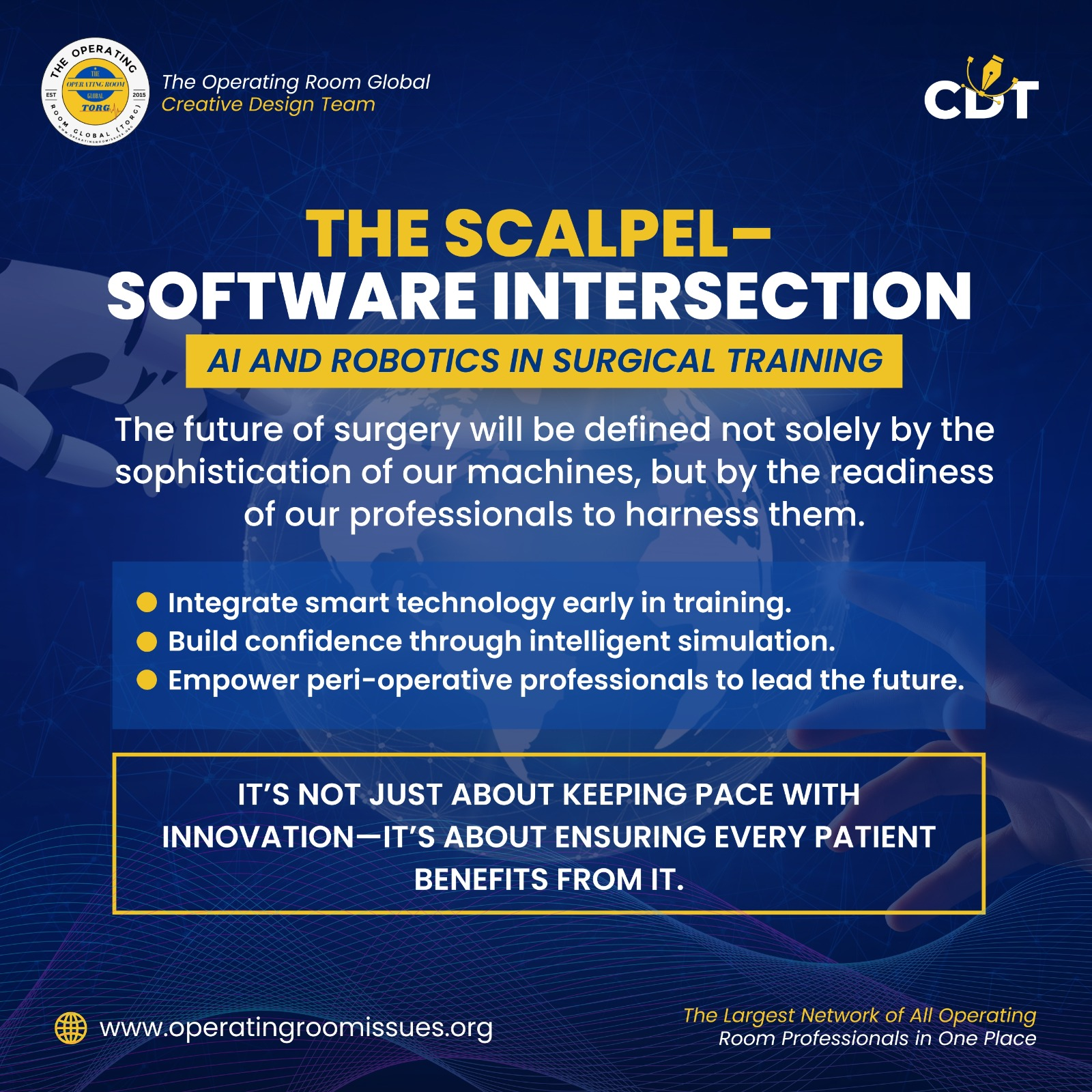
𝐓𝐡𝐞 𝐅𝐮𝐭𝐮𝐫𝐞 𝐨𝐟 𝐀𝐈 𝐚𝐧𝐝 𝐑𝐨𝐛𝐨𝐭𝐢𝐜𝐬 𝐢𝐧 𝐒𝐮𝐫𝐠𝐞𝐫𝐲: 𝐈𝐧𝐜𝐥𝐮𝐬𝐢𝐨𝐧 𝐢𝐧 𝐌𝐞𝐝𝐢𝐜𝐚𝐥 𝐄𝐝𝐮𝐜𝐚𝐭𝐢𝐨𝐧 𝐚𝐧𝐝 𝐈𝐦𝐩𝐨𝐫𝐭𝐚𝐧𝐜𝐞 𝐭𝐨 𝐄𝐚𝐫𝐥𝐲-𝐂𝐚𝐫𝐞𝐞𝐫 𝐏𝐞𝐫𝐢-𝐨𝐩𝐞𝐫𝐚𝐭𝐢𝐯𝐞 𝐏𝐫𝐨𝐟𝐞𝐬𝐬𝐢𝐨𝐧𝐚𝐥𝐬
𝐈. 𝐀 𝐓𝐫𝐚𝐧𝐬𝐟𝐨𝐫𝐦𝐚𝐭𝐢𝐯𝐞 𝐅𝐫𝐨𝐧𝐭𝐢𝐞𝐫 𝐢𝐧 𝐌𝐨𝐝𝐞𝐫𝐧 𝐌𝐞𝐝𝐢𝐜𝐢𝐧𝐞
The intersection of artificial intelligence (AI), robotics, and surgery represents one of the most transformative frontiers in modern medicine. Surgical practice has always been characterized by innovation—from anesthesia and antisepsis to minimally invasive techniques.
Today, AI-driven technologies and robotic-assisted platforms are redefining surgical care, enabling safer, more precise, and efficient interventions. As these tools become integral to clinical practice, their inclusion in medical education must be prioritized—especially for early-career peri-operative professionals shaping the next era of surgical excellence.
𝐈𝐈. 𝐓𝐡𝐞 𝐏𝐨𝐭𝐞𝐧𝐭𝐢𝐚𝐥 𝐨𝐟 𝐀𝐈 𝐢𝐧 𝐏𝐞𝐫𝐢-𝐎𝐩𝐞𝐫𝐚𝐭𝐢𝐯𝐞 𝐃𝐞𝐜𝐢𝐬𝐢𝐨𝐧-𝐌𝐚𝐤𝐢𝐧𝐠
AI holds immense potential in peri-operative decision-making — from pre-operative risk stratification and intra-operative guidance to post-operative monitoring.
Machine learning models analyze vast datasets and provide predictive insights that enhance patient safety. Robotic surgical systems offer unmatched dexterity, minimal access, and reduced fatigue — translating to improved outcomes and faster recovery.

𝐈𝐈𝐈. 𝐓𝐡𝐞 𝐄𝐝𝐮𝐜𝐚𝐭𝐢𝐨𝐧𝐚𝐥 𝐆𝐚𝐩 𝐚𝐧𝐝 𝐍𝐞𝐞𝐝 𝐟𝐨𝐫 𝐈𝐧𝐭𝐞𝐠𝐫𝐚𝐭𝐢𝐨𝐧
Despite major advancements, a significant education gap persists between technology and medical training. While senior surgeons can adapt through specialized programs, the most strategic step lies in integrating AI and robotic surgery into undergraduate and postgraduate curricula.
Early exposure to simulation-based training and AI-assisted analysis ensures that emerging professionals are not just end-users — but active contributors to surgical innovation.
𝐈𝐕. 𝐄𝐚𝐫𝐥𝐲-𝐂𝐚𝐫𝐞𝐞𝐫 𝐏𝐞𝐫𝐢-𝐎𝐩𝐞𝐫𝐚𝐭𝐢𝐯𝐞 𝐏𝐫𝐨𝐟𝐞𝐬𝐬𝐢𝐨𝐧𝐚𝐥𝐬 𝐚𝐧𝐝 𝐓𝐞𝐜𝐡𝐧𝐨𝐥𝐨𝐠𝐢𝐜𝐚𝐥 𝐀𝐝𝐚𝐩𝐭𝐚𝐛𝐢𝐥𝐢𝐭𝐲
For residents, fellows, anesthesiologists, nurses, and technologists, AI and robotics are no longer futuristic—they’re essential.
Embedding AI literacy and robotic competence into early training empowers professionals to adapt to complex surgical environments, enhance teamwork, and innovate across disciplines.
Early engagement also shortens the learning curve—helping them deliver safer and more efficient patient care from the start of their careers.
𝐕. 𝐁𝐫𝐢𝐝𝐠𝐢𝐧𝐠 𝐇𝐮𝐦𝐚𝐧 𝐄𝐱𝐩𝐞𝐫𝐭𝐢𝐬𝐞 𝐚𝐧𝐝 𝐌𝐚𝐜𝐡𝐢𝐧𝐞 𝐈𝐧𝐭𝐞𝐥𝐥𝐢𝐠𝐞𝐧𝐜𝐞
The future of surgery will be defined not by machines alone, but by how effectively humans collaborate with them.
Thus, medical institutions and surgical bodies must commit to structured AI and robotics integration in training. This is not just technological progress—it’s a responsibility to ensure that the next generation of surgeons and peri-operative professionals deliver the highest standard of care in a human–machine synergy.
𝐕𝐈. 𝐂𝐨𝐧𝐜𝐥𝐮𝐬𝐢𝐨𝐧: 𝐄𝐦𝐛𝐫𝐚𝐜𝐢𝐧𝐠 𝐓𝐡𝐞 𝐅𝐮𝐭𝐮𝐫𝐞 𝐓𝐨𝐝𝐚𝐲
The inclusion of AI and robotics in medical education is not optional—it’s essential. For early-career peri-operative professionals, this integration defines their capacity to lead, innovate, and provide safer surgical care.
By embracing this future today, the surgical community ensures that tomorrow’s operating rooms are not just technologically advanced, but also led by well-prepared professionals capable of transforming patient outcomes.
𝐀𝐭 𝐓𝐡𝐞 𝐎𝐩𝐞𝐫𝐚𝐭𝐢𝐧𝐠 𝐑𝐨𝐨𝐦 𝐆𝐥𝐨𝐛𝐚𝐥 (𝐓𝐎𝐑𝐆)
We are passionately committed to driving the future of surgical education through the integration of AI and robotics into peri-operative training and professional growth.
We believe that early exposure to innovation empowers young professionals to lead the next era of surgical advancement—where human skill and intelligent systems work hand-in-hand to deliver safer, smarter, and more efficient care.
𝐉𝐨𝐢𝐧 𝐎𝐮𝐫 𝐆𝐥𝐨𝐛𝐚𝐥 𝐂𝐨𝐦𝐦𝐮𝐧𝐢𝐭𝐲!
The Operating Room Global (TORG)
The Largest Network of Operating Room Professionals in One Place!
Learn More: https://linktr.ee/operatingroomissues
#TORG #TheOperatingRoomGlobal #OperatingRoomIssues #SurgicalInnovation #AIinSurgery #PerioperativeCare #MedicalEducation #FutureOfSurgery #RoboticSurgery #HealthcareInnovation #GlobalSurgery