

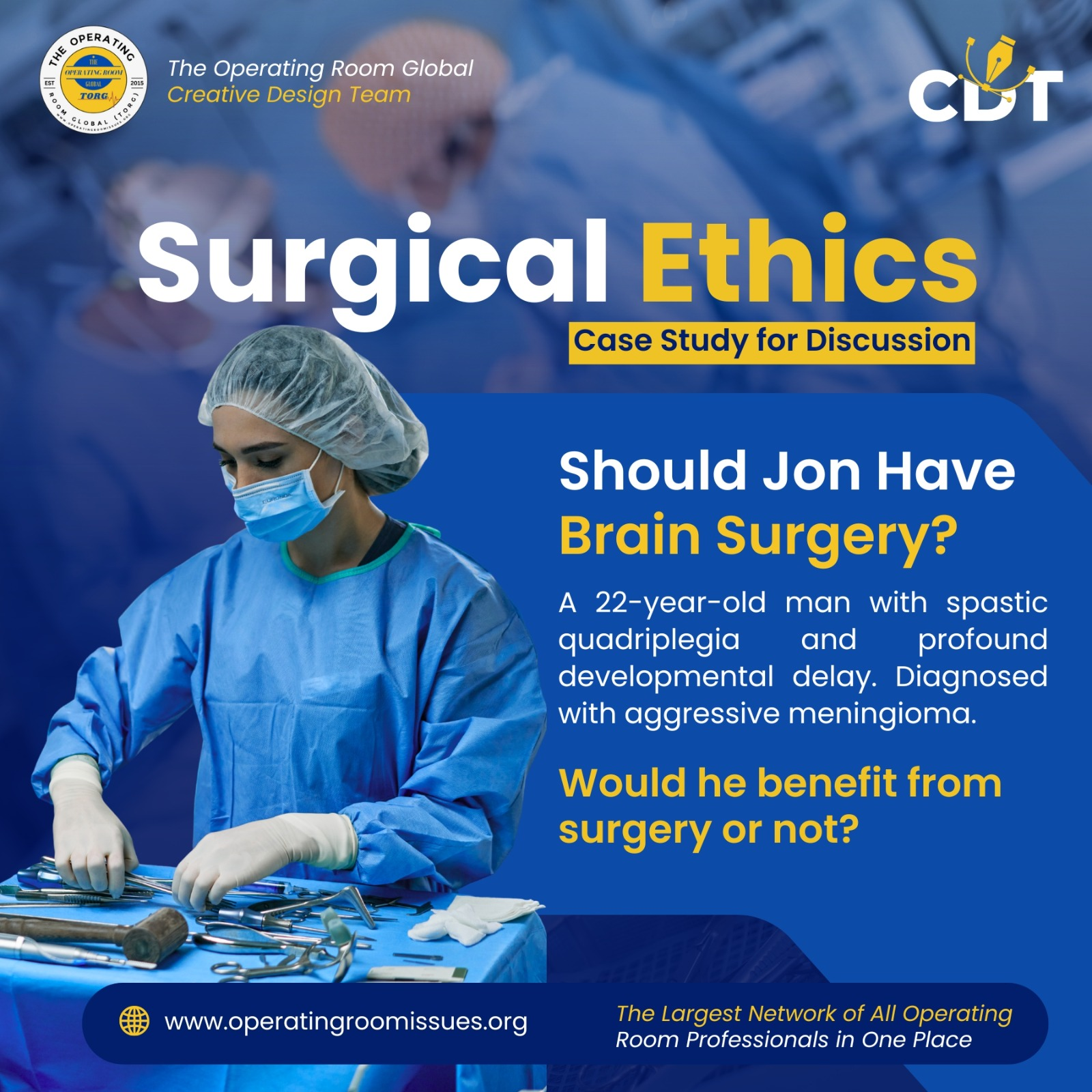
𝗦𝗰𝗲𝗻𝗮𝗿𝗶𝗼
Jon is a 22-year-old male with spastic quadriplegia and profound developmental delay. He is nonverbal and relies completely on caregivers for daily activities. Normally, he shows small but meaningful signs of responsiveness to his surroundings, like turning his head when his mother, Kim, speaks to him. Recently, however, these reactions have diminished, and he has become nearly unresponsive. Concerned, Kim brought him to the emergency department.
𝗙𝗶𝗻𝗱𝗶𝗻𝗴𝘀
Imaging revealed a large tumor on the left side of his brain, later diagnosed as a benign but aggressive meningioma. The neurosurgical team explained to Kim that surgery is the standard of care in such cases and could restore Jon to his prior baseline — allowing him once again to respond to voices and touch. However, they also warned of serious risks: bleeding, infection, neurological damage, and the possibility of tumor recurrence within months. Without surgery, the tumor would continue to grow and almost certainly prove fatal within the year.
𝗧𝗵𝗲 𝗘𝘁𝗵𝗶𝗰𝗮𝗹 𝗧𝗲𝗻𝘀𝗶𝗼𝗻
The neurosurgical team questioned whether the risks of surgery were justified, given Jon’s baseline level of functioning. One doctor asked: “𝘐𝘧 𝘸𝘦 𝘤𝘢𝘯 𝘰𝘯𝘭𝘺 𝘳𝘦𝘵𝘶𝘳𝘯 𝘩𝘪𝘮 𝘵𝘰 𝘸𝘩𝘦𝘳𝘦 𝘩𝘦 𝘸𝘢𝘴, 𝘪𝘴 𝘵𝘩𝘢𝘵 𝘳𝘦𝘢𝘭𝘭𝘺 𝘢 𝘮𝘦𝘢𝘯𝘪𝘯𝘨𝘧𝘶𝘭 𝘣𝘦𝘯𝘦𝘧𝘪𝘵?”
Kim, however, strongly disagreed. She urged the team to proceed, insisting: “𝘔𝘺 𝘴𝘰𝘯 𝘥𝘦𝘴𝘦𝘳𝘷𝘦𝘴 𝘵𝘩𝘦 𝘴𝘢𝘮𝘦 𝘤𝘢𝘳𝘦 𝘢𝘴 𝘢𝘯𝘺𝘰𝘯𝘦 𝘦𝘭𝘴𝘦. 𝘉𝘳𝘪𝘯𝘨𝘪𝘯𝘨 𝘩𝘪𝘮 𝘣𝘢𝘤𝘬 𝘵𝘰 𝘩𝘰𝘸 𝘩𝘦 𝘸𝘢𝘴 𝘣𝘦𝘧𝘰𝘳𝘦 𝘪𝘴 𝘢𝘭𝘳𝘦𝘢𝘥𝘺 𝘢 𝘨𝘪𝘧𝘵. 𝘏𝘦 𝘪𝘴 𝘢𝘭𝘭 𝘐 𝘩𝘢𝘷𝘦.”
𝗞𝗲𝘆 𝗜𝘀𝘀𝘂𝗲𝘀
• This scenario reflects a clash between two core ethical principles: Justice ( ) and Beneficence (
 ).
).
• How should “benefit” be defined — as improvement beyond baseline, or simply restoring baseline function?
• Should decisions be shaped by medical judgments about quality of life, or by the surrogate’s perspective on what counts as meaningful for the patient?
• Is it just to withhold a standard-of-care surgery from Jon when other patients would be offered the same treatment?
𝗧𝗵𝗲 𝗤𝘂𝗲𝘀𝘁𝗶𝗼𝗻
• What would be the ethically preferable course of action: proceed with surgery despite the risks, or prioritize comfort measures given the limited expected gains?
 𝑰𝒏𝒔𝒑𝒊𝒓𝒆𝒅 𝒃𝒚 𝒂 𝒓𝒆𝒂𝒍-𝒍𝒊𝒇𝒆 𝒄𝒂𝒔𝒆 𝒔𝒕𝒖𝒅𝒚 𝒑𝒖𝒃𝒍𝒊𝒔𝒉𝒆𝒅 𝒊𝒏 𝒃𝒊𝒐𝒆𝒕𝒉𝒊𝒄𝒔 𝒍𝒊𝒕𝒆𝒓𝒂𝒕𝒖𝒓𝒆, 𝒂𝒅𝒂𝒑𝒕𝒆𝒅 𝒉𝒆𝒓𝒆 𝒇𝒐𝒓 𝒑𝒆𝒓𝒊-𝒐𝒑𝒆𝒓𝒂𝒕𝒊𝒗𝒆 𝒓𝒆𝒇𝒍𝒆𝒄𝒕𝒊𝒐𝒏 𝒂𝒏𝒅 𝒑𝒓𝒐𝒇𝒆𝒔𝒔𝒊𝒐𝒏𝒂𝒍 𝒅𝒊𝒂𝒍𝒐𝒈𝒖𝒆.
 𝗝𝗼𝗶𝗻 𝘁𝗵𝗲 𝗱𝗶𝘀𝗰𝘂𝘀𝘀𝗶𝗼𝗻!
What are your thoughts on Jon’s case? Share your ethical reflections in the comments — tomorrow, we will post TORG’s own ethical response.
 𝗔𝘁 𝗧𝗛𝗘 𝗢𝗣𝗘𝗥𝗔𝗧𝗜𝗡𝗚 𝗥𝗢𝗢𝗠 𝗚𝗟𝗢𝗕𝗔𝗟 (𝗧𝗢𝗥𝗚), we amplify ethical conversations in perioperative care and unite professionals worldwide to learn, reflect, and grow together.
Ethical Reflection and Final Decision

💭 𝑬𝒕𝒉𝒊𝒄𝒂𝒍 𝑨𝒏𝒂𝒍𝒚𝒔𝒊𝒔
👩👦 𝑭𝒂𝒎𝒊𝒍𝒚 𝑷𝒆𝒓𝒔𝒑𝒆𝒄𝒕𝒊𝒗𝒆:
Jon’s mother, Kim, strongly advocates for surgery, requesting that her son be treated like any other patient. She emphasizes that the surgery could restore Jon to his previous state and highlights the personal significance of Jon as her only family.
🔹 The neurosurgical team and ethicists explored whether Jon’s differences from other patients were morally relevant to deciding on surgery. They noted that while many patients would experience profound functional improvements, Jon’s benefits would be more modest. This could make the risk-benefit ratio less favorable, potentially justifying a departure from standard care.
🔹 The concept of “benefit” was interpreted differently: the intensive care team viewed it as absolute functional improvement, whereas Kim viewed it relative to Jon’s baseline function. Kim’s framing rejects assumptions about the quality of life of individuals with intellectual disabilities — perspectives that can be ethically biased.
🔹 In values-based disagreements, ethical guidance often favors following the patient’s or surrogate’s values. Kim, as Jon’s surrogate, seeks to act in his best interests, though her emotional connection was also evident — reflecting love, duty, and hope.
⚖️ 𝑫𝒆𝒄𝒊𝒔𝒊𝒐𝒏:
Given Kim’s sincere advocacy and the ethical analysis, proceeding with surgery is ethically supportable. The recommendation honors both justice (treating like cases alike) and the surrogate’s role in acting in Jon’s best interests — even amid differing conceptions of benefit and quality of life judgments.
📌 𝑰𝒏𝒔𝒑𝒊𝒓𝒆𝒅 𝒃𝒚 𝒂 𝒓𝒆𝒂𝒍-𝒍𝒊𝒇𝒆 𝒄𝒂𝒔𝒆 𝒔𝒕𝒖𝒅𝒚 𝒑𝒖𝒃𝒍𝒊𝒔𝒉𝒆𝒅 𝒊𝒏 𝒃𝒊𝒐𝒆𝒕𝒉𝒊𝒄𝒔 𝒍𝒊𝒕𝒆𝒓𝒂𝒕𝒖𝒓𝒆, 𝒂𝒅𝒂𝒑𝒕𝒆𝒅 𝒉𝒆𝒓𝒆 𝒇𝒐𝒓 𝒑𝒆𝒓𝒊-𝒐𝒑𝒆𝒓𝒂𝒕𝒊𝒗𝒆 𝒓𝒆𝒇𝒍𝒆𝒄𝒕𝒊𝒐𝒏 𝒂𝒏𝒅 𝒑𝒓𝒐𝒇𝒆𝒔𝒔𝒊𝒐𝒏𝒂𝒍 𝒅𝒊𝒂𝒍𝒐𝒈𝒖𝒆.
🌍 𝗔𝘁 𝗧𝗛𝗘 𝗢𝗣𝗘𝗥𝗔𝗧𝗜𝗡𝗚 𝗥𝗢𝗢𝗠 𝗚𝗟𝗢𝗕𝗔𝗟 (𝗧𝗢𝗥𝗚), we amplify ethical conversations in perioperative care and unite professionals worldwide to learn, reflect, and grow together.
 𝐉𝐨𝐢𝐧 𝐎𝐮𝐫 𝐆𝐥𝐨𝐛𝐚𝐥 𝐂𝐨𝐦𝐦𝐮𝐧𝐢𝐭𝐲!
The Operating Room Global (TORG)
𝑇ℎ𝑒 𝐿𝑎𝑟𝑔𝑒𝑠𝑡 𝑁𝑒𝑡𝑤𝑜𝑟𝑘 𝑜𝑓 𝑂𝑝𝑒𝑟𝑎𝑡𝑖𝑛𝑔 𝑅𝑜𝑜𝑚 𝑃𝑟𝑜𝑓𝑒𝑠𝑠𝑖𝑜𝑛𝑎𝑙𝑠 𝑖𝑛 𝑂𝑛𝑒 𝑃𝑙𝑎𝑐𝑒! Learn More: https://linktr.ee/operatingroomissues