

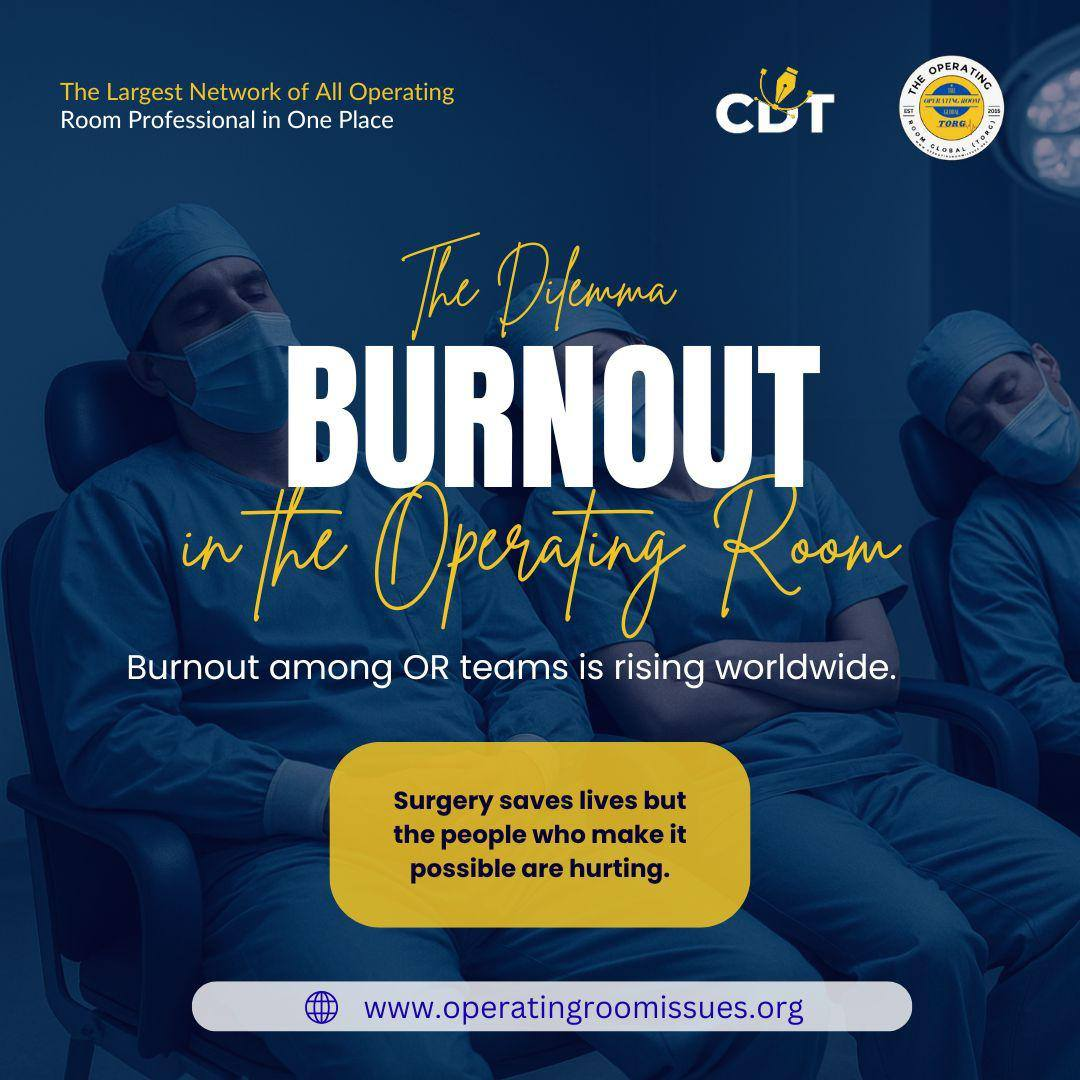
𝐁𝐮𝐫𝐧𝐨𝐮𝐭 𝐢𝐧 𝐭𝐡𝐞 𝐎𝐩𝐞𝐫𝐚𝐭𝐢𝐧𝐠 𝐑𝐨𝐨𝐦-𝐂𝐚𝐫𝐢𝐧𝐠 𝐟𝐨𝐫 𝐭𝐡𝐞 𝐂𝐚𝐫𝐞𝐫𝐬
Operating room is often painted as a place of strength, heroism, and technical mastery. Yet behind every successful operation, there are human beings carrying invisible burdens, stress, fatigue, emotional scars. Burnout in the operating room (OR) is not just a personal problem, it is a systemic crisis with real consequences for patient care, professional retention, and the future of surgical systems globally.
Burnout characterized by emotional exhaustion, depersonalization, and a reduced sense of personal accomplishment is now widely recognized among surgeons, anesthesiologists, nurses, and perioperative staff. Studies across various regions report rising levels of fatigue, stress, and moral injury among OR teams.

𝐇𝐨𝐰 𝐖𝐢𝐝𝐞𝐬𝐩𝐫𝐞𝐚𝐝 𝐢𝐬 𝐎𝐑 𝐁𝐮𝐫𝐧𝐨𝐮𝐭?
Burnout among surgeons and surgical trainees is deeply documented. A systematic review of surgical professionals found that up to 95% of general surgery trainees report burnout at varying levels( Matthew Sauder et al.)
For attending general surgeons, one national survey reported 69.1% experienced burnout, and about 22% had severe burnout symptoms (Suleyman Utku Celik et al.)
Trauma surgeons are particularly impacted: a recent meta-analysis estimated a 60% burnout rate among them, with younger age, long hours, and administrative burden among the key risk factors(S Kirdar-Smith et al.)
Nurses and anesthetists in the OR are not immune. A large cross-sectional study found OR nurses in the U.S. had burnout rates above 70%, underscoring that emotional exhaustion and stress extend beyond surgeons themselves. (Hueto Madrid et al.)
A broader review across surgical specialties placed the average burnout rate at 47%, though some specialties see rates as high as 77%. (Damilola Jesuyajolu et al.)

𝐖𝐡𝐲 𝐃𝐨 𝐒𝐮𝐫𝐠𝐞𝐫𝐲 𝐒𝐩𝐞𝐜𝐢𝐟𝐢𝐜𝐚𝐥𝐥𝐲 𝐁𝐮𝐫𝐧 𝐏𝐞𝐨𝐩𝐥𝐞 𝐎𝐮𝐭?
Several factors make OR teams especially vulnerable:
Relentless work hours: Many surgeons report working over 60 hours a week, and the demands of training institutions can push this higher.
High-stakes decision-making: Surgeons make life-or-death choices routinely, under pressure, with limited room for error.
Emotional cost: Failed operations, complications, or patient death can weigh heavily. The constant demand to maintain composure can drain one’s emotional reserves.
Isolation: Despite working in teams, surgeons often feel lonely. The emotional burden is personal and rarely discussed.
Burnout drivers: Factors such as younger age, female gender, and lack of social or institutional support correlate strongly with higher burnout.
𝐂𝐨𝐧𝐬𝐞𝐪𝐮𝐞𝐧𝐜𝐞𝐬 𝐁𝐞𝐲𝐨𝐧𝐝 𝐁𝐮𝐫𝐧𝐞𝐝-𝐎𝐮𝐭 𝐇𝐞𝐚𝐫𝐭𝐬
Burnout is not a private struggle,it leaks into every facet of surgical care:
Patient Safety Risks: Emotional exhaustion and depersonalization can impair clinical judgement, increasing risk of mistakes.
Workforce Loss: Burned-out surgeons are more likely to reduce clinical hours, leave academia, or exit surgery entirely.
Reduced Quality of Life: Depression, substance misuse, and strained relationships are more common in surgeons facing chronic burnout.
𝐇𝐨𝐰 𝐖𝐞 𝐂𝐚𝐧 𝐂𝐚𝐫𝐞 𝐟𝐨𝐫 𝐭𝐡𝐞 𝐂𝐚𝐫𝐞𝐫𝐬
Protecting OR professionals demands action on multiple levels:
1. Institutional Change
~Recognize burnout as a legitimate health concern
~Provide regular mental health support and counselling
~Implement fair scheduling, rest breaks, and limits on hours.
2. Team Culture
~Create safe spaces for Operating Room staff to speak about stress
~Encourage mentorship and peer-support programs
~Reduce stigma around emotional vulnerability.
3. Policy & Leadership
~Surgical departments must prioritize well-being metrics in performance reviews
~Invest in wellness training and resilience programs
~Advocate for systemic reforms that reduce administrative burden.
4. Individual Strategies
~Promote self-care habits: sleep hygiene, exercise, and time off
~Encourage reflective practice, such as debriefing after difficult cases
~Develop resilience skills through coaching or mindfulness.
𝐀 𝐂𝐚𝐥𝐥 𝐭𝐨 𝐀𝐜𝐭𝐢𝐨𝐧
In TORG we know burnout in the OR is not just a “noble sacrifice” it’s a preventable harm.
To care for patients well, we must care for the people who care for them.
TORG advocates for commitment to build surgical systems where:
 OR teams can thrive, not just survive Surgeons and nurses have real support not just more work Sustainable practice becomes the standard, not the exception
𝐈𝐟 𝐭𝐡𝐞 𝐡𝐚𝐧𝐝𝐬 𝐭𝐡𝐚𝐭 𝐡𝐞𝐚𝐥 𝐚𝐫𝐞 𝐡𝐮𝐫𝐭𝐢𝐧𝐠, 𝐰𝐞 𝐫𝐢𝐬𝐤 𝐥𝐨𝐬𝐢𝐧𝐠 𝐦𝐨𝐫𝐞 𝐭𝐡𝐚𝐧 𝐬𝐮𝐫𝐠𝐞𝐨𝐧𝐬,𝐰𝐞 𝐫𝐢𝐬𝐤 𝐥𝐨𝐬𝐢𝐧𝐠 𝐡𝐨𝐩𝐞.
 𝐉𝐨𝐢𝐧 𝐎𝐮𝐫 𝐆𝐥𝐨𝐛𝐚𝐥 𝐂𝐨𝐦𝐦𝐮𝐧𝐢𝐭𝐲!
The Operating Room Global (TORG)
𝑇ℎ𝑒 𝐿𝑎𝑟𝑔𝑒𝑠𝑡 𝑁𝑒𝑡𝑤𝑜𝑟𝑘 𝑜𝑓 𝐚𝐥𝐥 𝑂𝑝𝑒𝑟𝑎𝑡𝑖𝑛𝑔 𝑅𝑜𝑜𝑚 𝑃𝑟𝑜𝑓𝑒𝑠𝑠𝐢𝐨𝐧𝐚𝐥𝐬 𝑖𝑛 𝑂𝑛𝐞 𝑃𝑙𝑎𝐜𝐞!
Learn More: https://linktr.ee/operatingroomissues
#TORG #OperatingRoomGlobal #SurgicalCommunity #GlobalSurgery #ORProfessionals #SafeSurgeryForAll #PerioperativeCare #ScrubNurses #TheatreNurses #AnesthesiaCare #SurgicalTeams#HealthcareExcellence#SurgerySavesLives #PatientSafety #BurnoutAwareness #CareForTheCarers