

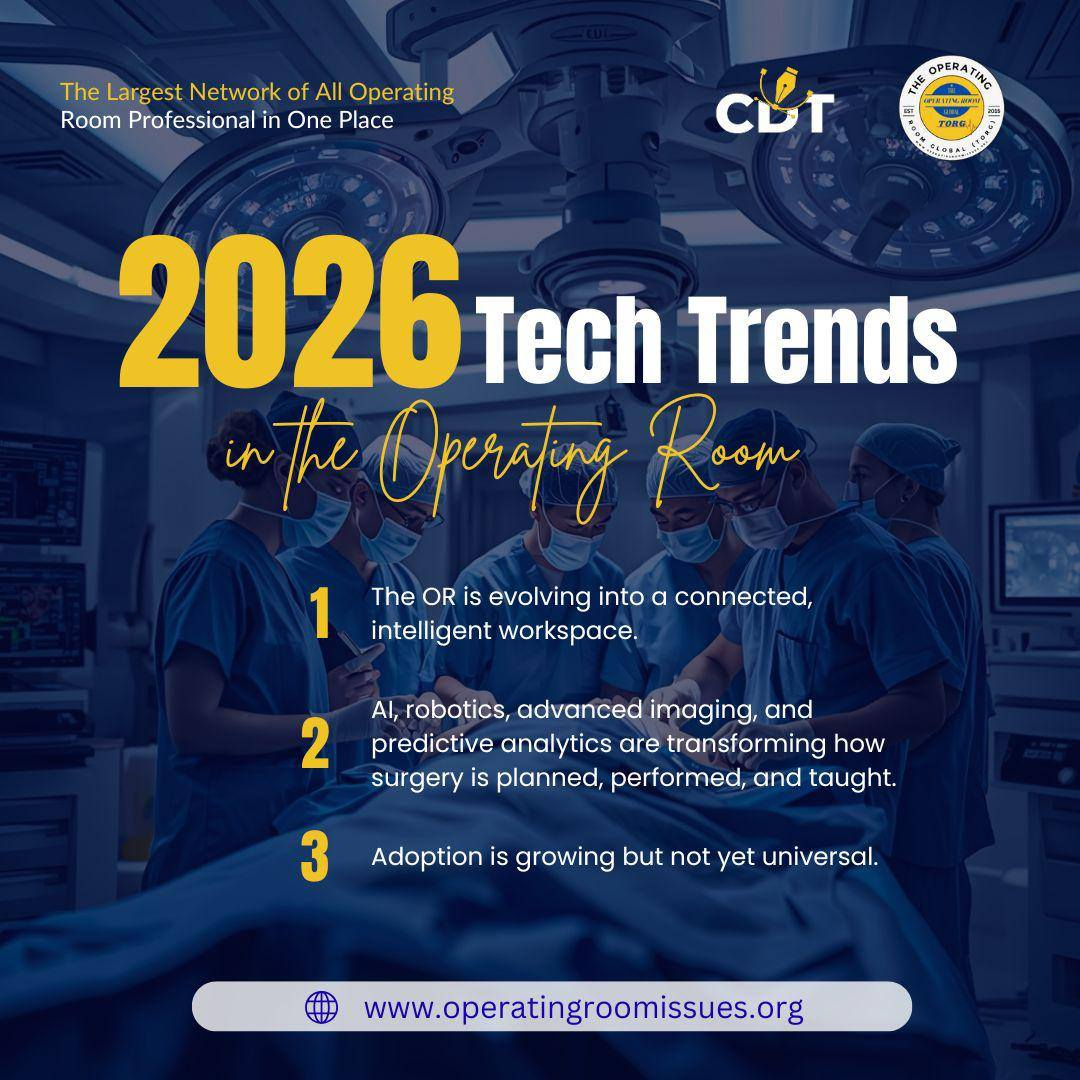
𝟮𝟬𝟮𝟲 𝗧𝗲𝗰𝗵 𝗧𝗿𝗲𝗻𝗱𝘀 𝗶𝗻 𝘁𝗵𝗲 𝗢𝗽𝗲𝗿𝗮𝘁𝗶𝗻𝗴 𝗥𝗼𝗼𝗺
𝑻𝒉𝒆 𝒊𝒏𝒕𝒆𝒍𝒍𝒊𝒈𝒆𝒏𝒄𝒆 𝒓𝒆𝒗𝒐𝒍𝒖𝒕𝒊𝒐𝒏 𝒓𝒆𝒅𝒆𝒇𝒊𝒏𝒊𝒏𝒈 𝒔𝒖𝒓𝒈𝒆𝒓𝒚
As we enter 2026, the operating room (OR) is changing. It is no longer just a place for manual procedures. It is becoming a data rich and connected workspace where artificial intelligence, robotics, advanced imaging, and predictive tools are changing how surgery is planned, performed, taught, and managed.
These changes are real and accelerating. Many are already in use at leading centers. None are universally adopted everywhere yet.
𝕋𝕙𝕚𝕤 𝕒𝕣𝕥𝕚𝕔𝕝𝕖 𝕣𝕖𝕗𝕝𝕖𝕔𝕥𝕤 𝕔𝕦𝕣𝕣𝕖𝕟𝕥 𝕔𝕒𝕡𝕒𝕓𝕚𝕝𝕚𝕥𝕚𝕖𝕤, 𝕖𝕒𝕣𝕝𝕪 𝕕𝕖𝕡𝕝𝕠𝕪𝕞𝕖𝕟𝕥𝕤, 𝕒𝕟𝕕 𝕣𝕖𝕒𝕝𝕚𝕤𝕥𝕚𝕔 𝕟𝕖𝕒𝕣 𝕥𝕖𝕣𝕞 𝕖𝕩𝕡𝕖𝕔𝕥𝕒𝕥𝕚𝕠𝕟𝕤.

𝟭. 𝗔𝗺𝗯𝗶𝗲𝗻𝘁 𝗔𝗜 𝗮𝗻𝗱 𝗿𝗲𝗱𝘂𝗰𝗲𝗱 𝗺𝗮𝗻𝘂𝗮𝗹 𝗱𝗼𝗰𝘂𝗺𝗲𝗻𝘁𝗮𝘁𝗶𝗼𝗻 🧠
Ambient Clinical Intelligence (ACI) systems listen to intraoperative discussion and capture key events. They convert this information into structured operative notes, reports, and discharge summaries in near real time.
𝙒𝙝𝙖𝙩 𝙩𝙝𝙞𝙨 𝙙𝙤𝙚𝙨:
It reduces time spent on documentation, limits after hours charting, improves consistency, and creates better data for quality improvement.
𝙒𝙝𝙖𝙩 𝙩𝙤 𝙚𝙭𝙥𝙚𝙘𝙩 𝙞𝙣 𝟮𝟬𝟮𝟲:
Wider use in academic hospitals and larger community centers. Many systems will still be piloting or partially deploying these tools, rather than using them in every operating room.
𝟮. 𝗗𝗶𝗴𝗶𝘁𝗮𝗹 𝗴𝗮𝗺𝗲 𝗳𝗶𝗹𝗺 𝗮𝗻𝗱 𝘀𝘂𝗿𝗴𝗶𝗰𝗮𝗹 𝗽𝗲𝗿𝗳𝗼𝗿𝗺𝗮𝗻𝗰𝗲 𝗮𝗻𝗮𝗹𝘆𝘁𝗶𝗰𝘀 🎥
Operating room video, instrument tracking, and wearable sensors are increasingly used to generate objective post case performance reports. Surgeons can review technique, efficiency, and ergonomics in a structured way.
𝙒𝙝𝙖𝙩 𝙩𝙝𝙞𝙨 𝙙𝙤𝙚𝙨:
It supports continuous improvement, targeted coaching, and more objective approaches to training and credentialing.
𝙒𝙝𝙖𝙩 𝙩𝙤 𝙚𝙭𝙥𝙚𝙘𝙩 𝙞𝙣 𝟮𝟬𝟮𝟲:
Regular use in high volume robotic programs and tertiary centers. Availability will continue to expand through robotic platforms and independent analytics vendors.
𝟯. 𝗦𝗺𝗮𝗿𝘁𝗲𝗿 𝗿𝗼𝗯𝗼𝘁𝗶𝗰𝘀 𝘄𝗶𝘁𝗵 𝗹𝗶𝗺𝗶𝘁𝗲𝗱 𝗮𝘂𝘁𝗼𝗻𝗼𝗺𝘆 🤖
Robotic systems are adding smarter assistance for specific tasks such as camera control, suture guidance, and instrument stabilization. These functions operate under direct surgeon supervision.
𝙒𝙝𝙖𝙩 𝙩𝙝𝙞𝙨 𝙙𝙤𝙚𝙨:
It improves precision, reduces variability, and supports consistency during technically demanding steps.
𝙒𝙝𝙖𝙩 𝙩𝙤 𝙚𝙭𝙥𝙚𝙘𝙩 𝙞𝙣 𝟮𝟬𝟮𝟲:
Limited clinical use of semi autonomous features in controlled settings. Fully autonomous surgery will remain experimental and tightly regulated.
𝟰. 𝗡𝗲𝘅𝘁 𝗴𝗲𝗻𝗲𝗿𝗮𝘁𝗶𝗼𝗻 𝗶𝗺𝗮𝗴𝗶𝗻𝗴 𝗮𝗻𝗱 𝗲𝗻𝗵𝗮𝗻𝗰𝗲𝗱 𝘃𝗶𝘀𝘂𝗮𝗹𝗶𝘇𝗮𝘁𝗶𝗼𝗻 🔬
Advanced imaging technologies such as hyperspectral imaging, fluorescence guidance, and AI driven computer vision can highlight tissue perfusion, nerve pathways, and tumor margins that are difficult to see under standard lighting. Augmented reality can display this information directly in the surgical field.
𝙒𝙝𝙖𝙩 𝙩𝙝𝙞𝙨 𝙙𝙤𝙚𝙨:
It supports better margin assessment, reduces unintended tissue injury, and improves intraoperative decision making.

𝙒𝙝𝙖𝙩 𝙩𝙤 𝙚𝙭𝙥𝙚𝙘𝙩 𝙞𝙣 𝟮𝟬𝟮𝟲:
Selective adoption in specific specialties and centers, with several technologies still in clinical trials or early rollout phases.
𝟱. 𝗣𝗿𝗲𝗱𝗶𝗰𝘁𝗶𝘃𝗲 𝗼𝗿𝗰𝗵𝗲𝘀𝘁𝗿𝗮𝘁𝗶𝗼𝗻 𝗮𝗻𝗱 𝘁𝗵𝗲 𝗢𝗥 𝗰𝗼𝗺𝗺𝗮𝗻𝗱 𝗰𝗲𝗻𝘁𝗲𝗿 📊
Operating room management is moving toward predictive systems that combine scheduling, staffing, supply management, and patient data. These tools forecast case duration, suggest staffing adjustments, and flag emerging clinical risks by combining live vital signs with historical records.
𝙒𝙝𝙖𝙩 𝙩𝙝𝙞𝙨 𝙙𝙤𝙚𝙨:
It improves throughput, reduces delays, and supports earlier recognition of patient deterioration.
𝙒𝙝𝙖𝙩 𝙩𝙤 𝙚𝙭𝙥𝙚𝙘𝙩 𝙞𝙣 𝟮𝟬𝟮𝟲:
Use in advanced health systems with strong digital infrastructure. Broader adoption will depend on system integration and data interoperability.
𝟲. 𝗦𝘂𝗿𝗴𝗶𝗰𝗮𝗹 𝗺𝗲𝘁𝗮𝘃𝗲𝗿𝘀𝗲𝘀 𝗮𝗻𝗱 𝗱𝗶𝗴𝗶𝘁𝗮𝗹 𝘁𝘄𝗶𝗻𝘀 🌐
Patient specific digital twins built from imaging data and immersive VR or AR environments allow surgeons to rehearse procedures before surgery. High bandwidth telepresence and robotic platforms support remote guidance from experienced colleagues.
𝙒𝙝𝙖𝙩 𝙩𝙝𝙞𝙨 𝙙𝙤𝙚𝙨:
It improves preparation for complex cases, shortens learning curves, and expands access to expertise.
𝙒𝙝𝙖𝙩 𝙩𝙤 𝙚𝙭𝙥𝙚𝙘𝙩 𝙞𝙣 𝟮𝟬𝟮𝟲:
Routine use for training and preoperative planning in teaching hospitals, with growing use of remote support where infrastructure and regulation allow.
𝟳. 𝗛𝘂𝗺𝗮𝗻-𝗠𝗮𝗰𝗵𝗶𝗻𝗲 𝗰𝗼𝗹𝗹𝗮𝗯𝗼𝗿𝗮𝘁𝗶𝗼𝗻 𝗶𝗻 𝘀𝘂𝗿𝗴𝗲𝗿𝘆 🩺
These technologies are tools that support clinical judgment rather than replace it. Safe and effective use depends on training, workflow design, and strong clinical governance.
𝙒𝙝𝙖𝙩 𝙩𝙝𝙞𝙨 𝙙𝙤𝙚𝙨:
It enhances safety and efficiency when teams understand the technology and use it appropriately.
𝙒𝙝𝙖𝙩 𝙩𝙤 𝙚𝙭𝙥𝙚𝙘𝙩 𝙞𝙣 𝟮𝟬𝟮𝟲:
Greater emphasis on digital skills in surgical education and clearer governance frameworks for AI supported care.
𝗖𝗼𝗻𝗰𝗹𝘂𝘀𝗶𝗼𝗻 🌍
By 2026, many operating rooms will be more connected, data driven, and predictive than before. Leading centers will demonstrate clear benefits from ambient AI, performance analytics, smarter robotics, advanced imaging, and predictive OR management. Adoption will remain uneven due to differences in resources, regulation, training, and system integration.
𝗔𝗱𝘃𝗼𝗰𝗮𝗰𝘆 𝗮𝗻𝗱 𝗔𝗱𝘃𝗶𝗰𝗲 𝗳𝗿𝗼𝗺 𝗧𝗢𝗥𝗚 📣
The Operating Room Global (TORG) stands for a worldwide community of operating room and perioperative professionals committed to education, collaboration, advocacy, and the advancement of safe surgical care.
TORG recognizes that advanced operating room technology in 2026 will not be globally or evenly available. Many local hospitals, whether in high income countries, low and middle income countries, or low resource and high resource settings, will continue to face challenges related to cost, infrastructure, workforce capacity, and access to innovation.
𝙏𝙊𝙍𝙂 𝙘𝙖𝙡𝙡𝙨 𝙛𝙤𝙧 𝙨𝙩𝙧𝙤𝙣𝙜𝙚𝙧 𝙖𝙙𝙫𝙤𝙘𝙖𝙘𝙮, 𝙞𝙣𝙫𝙚𝙨𝙩𝙢𝙚𝙣𝙩, 𝙖𝙣𝙙 𝙘𝙤𝙢𝙢𝙞𝙩𝙢𝙚𝙣𝙩 𝙩𝙤 𝙚𝙦𝙪𝙞𝙩𝙖𝙗𝙡𝙚 𝙖𝙘𝙘𝙚𝙨𝙨.
𝙏𝙊𝙍𝙂 𝙚𝙣𝙘𝙤𝙪𝙧𝙖𝙜𝙚𝙨 𝙥𝙚𝙧𝙞𝙤𝙥𝙚𝙧𝙖𝙩𝙞𝙫𝙚 𝙖𝙣𝙙 𝙤𝙥𝙚𝙧𝙖𝙩𝙞𝙣𝙜 𝙧𝙤𝙤𝙢 𝙥𝙧𝙤𝙛𝙚𝙨𝙨𝙞𝙤𝙣𝙖𝙡𝙨 𝙩𝙤 𝙧𝙖𝙞𝙨𝙚 𝙩𝙝𝙚𝙞𝙧 𝙡𝙚𝙫𝙚𝙡 𝙤𝙛 𝙥𝙧𝙚𝙥𝙖𝙧𝙚𝙙𝙣𝙚𝙨𝙨 𝙗𝙮 𝙖𝙘𝙩𝙞𝙫𝙚𝙡𝙮 𝙡𝙚𝙖𝙧𝙣𝙞𝙣𝙜, 𝙖𝙙𝙖𝙥𝙩𝙞𝙣𝙜, 𝙖𝙣𝙙 𝙖𝙘𝙦𝙪𝙞𝙧𝙞𝙣𝙜 𝙙𝙞𝙜𝙞𝙩𝙖𝙡 𝙖𝙣𝙙 𝘼𝙄 𝙧𝙚𝙡𝙖𝙩𝙚𝙙 𝙨𝙠𝙞𝙡𝙡𝙨. 📘🚀
🌐𝐉𝐨𝐢𝐧 𝐎𝐮𝐫 𝐆𝐥𝐨𝐛𝐚𝐥 𝐂𝐨𝐦𝐦𝐮𝐧𝐢𝐭𝐲!
The Operating Room Global (TORG)
𝑇ℎ𝑒 𝐿𝑎𝑟𝑔𝑒𝑠𝑡 𝑁𝑒𝑡𝑤𝑜𝑟𝑘 𝑜𝑓 𝑎𝑙𝑙 𝑂𝑝𝑒𝑟𝑎𝑡𝑖𝑛𝑔 𝑅𝑜𝑜𝑚 𝑃𝑟𝑜𝑓𝑒𝑠𝑠𝑖𝑜𝑛𝑎𝑙𝑠 𝑖𝑛 𝑂𝑛𝑒 𝑃𝑙𝑎𝑐𝑒!
Learn More:
https://linktr.ee/operatingroomissues
#TORG #theoperatingroomglobal #operatingroomissues #SurgicalInnovation #FutureOfSurgery #PerioperativeCare #AIinHealthcare #ORProfessionals #GlobalSurgery #PatientSafety